
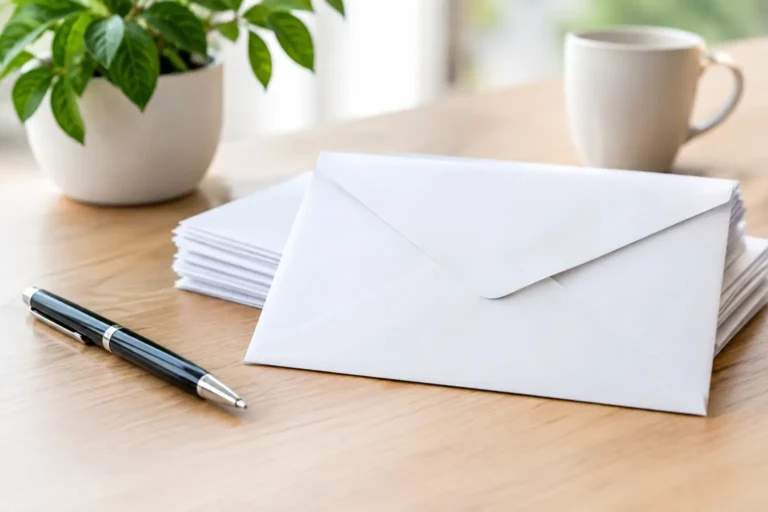
A great card can make someone laugh, tear up, or feel truly seen before they have even opened it. Addressing card envelopes is the first little moment of that experience. A clear, thoughtfully written envelope tells the recipient that this birthday wish, thank-you note, invitation, or just-because card was picked out especially for them.
The good news is that an envelope does not need fancy calligraphy or a cabinet full of supplies to look lovely. A few simple choices around names, handwriting, layout, and postage can turn a practical wrapper into part of the gift.
Why addressing card envelopes matters
The envelope sets the tone. A floral thank-you card with a rushed, hard-to-read address can lose some of its charm before it reaches the mailbox. On the other hand, a neatly addressed envelope with a cheerful stamp and a return address gives even a simple card a finished, personal feel.
It is also the difference between a card arriving on time and taking an accidental detour. Postal equipment needs a readable delivery address, especially when mail is traveling across states or overseas. Keeping the important details clear helps your happy mail land where it belongs.
There is room for personality, too. A fun birthday card for a best friend can absolutely have colorful lettering or a tiny doodle in the corner. A sympathy card, wedding invitation, or professional thank-you note may call for a quieter approach. The best style is the one that fits both the occasion and the person receiving it.
Start with the right envelope and pen
Before you write a single name, take a quick look at the envelope color and finish. White, cream, and pale pastel envelopes are easy to read with black, blue, dark green, or deep burgundy ink. Dark envelopes can look dramatic and festive, but they usually need a white, metallic, or opaque gel pen for contrast.
Choose a pen that writes smoothly without skipping, smudging, or bleeding through the paper. A fine-tip felt pen can give a relaxed handwritten look, while a gel pen feels a little more polished. Ballpoint pens are dependable for everyday mailing, particularly if you are addressing several cards at once. If the envelope has a glossy surface, test your pen on a spare corner or similar paper first.
For bulk birthday cards, holiday cards, or classroom thank-yous, consistency matters more than perfection. Use one pen color, work on a clean flat surface, and give the ink a few seconds to dry before stacking envelopes. This small bit of patience prevents smeared names and ink on your hands.
Make sure the address fits
The delivery address belongs in the center of the envelope, leaving space at the top right for postage. The return address goes in the upper left corner or on the back flap. Avoid crowding the edges, where postal marks and handling can make details harder to read.
If you are writing a longer name or an apartment address, slightly smaller lettering is better than squeezing words together. You can also use two lines for the street and apartment information. Clear spacing is always more useful than trying to make every line look perfectly centered.
How to write names without overthinking them
Names are personal, so use the name a person uses for themselves. For a friend, that may be a nickname. For a child, it may be their full first name with a fun little star nearby. For a couple, family, or formal occasion, a more traditional format may feel right.
For casual cards, “Jamie,” “The Patel Family,” or “Auntie Mia and Uncle Rob” is warm and completely appropriate. If the card is for a wedding, graduation, condolence, or work relationship, consider using full names and titles where they are preferred. “Mr. and Mrs.” is still welcome for some recipients, but it is not a one-size-fits-all rule. When in doubt, use each person’s name: “Taylor and Jordan Lee” is clear, modern, and considerate.
If you are sending a card to a child at a family address, put the child’s name first, followed by “c/o” and the parent or guardian’s name if needed. That makes the intended recipient feel special while ensuring the household knows who the envelope is for.
A simple format that works every time
For most personal mail, keep the address in this order:
Recipient name Street address and apartment or unit number City, state, and ZIP code
For example:
Maya Thompson 184 Willow Lane, Apt. 3B Austin, TX 78704
Write out words when it improves clarity, but standard address abbreviations such as “St.”, “Ave.”, “Rd.”, and “Apt.” are perfectly fine. The key is readability. Use the official ZIP code if you have it, double-check apartment numbers, and make sure the city matches the state. A card sent with love is much more fun when it does not come back marked undeliverable.
For an international card, use the recipient’s address format for their country and write the destination country in capital letters on the final line. International postage requirements vary, so check the current mailing details before dropping it in the box.
Add personality without confusing the mail carrier
Creative details can make an envelope feel like a mini celebration. The trick is keeping the address easy to spot. Save illustrations, stickers, washi tape, and tiny messages for the edges, back flap, or space around the return address.
A few playful options work especially well for birthdays and everyday cards. Draw a small cake, balloon, flower, smiley face, paw print, or gaming-inspired icon that matches the card inside. Add a return-address sticker with a cute character. Use a coordinating stamp for an extra pop of color. For party invitations, a sticker seal on the flap can make opening the envelope feel more exciting.
Avoid putting stickers over address lines, covering the stamp area, or adding bulky decorations that can catch in sorting machines. Puffy stickers, loose glitter, ribbon, and thick wax seals are better for hand-delivered cards or gift bags. They are adorable, but they may require extra postage or risk damage in the mail.
When labels are the better choice
Handwriting feels wonderfully personal, but labels are a smart option when you are mailing many envelopes. Holiday card lists, teacher appreciation notes, baby shower invitations, and business thank-yous can add up fast. Printed labels save time and help prevent spelling mistakes.
You do not have to choose between efficient and heartfelt. Print the delivery address, then handwrite the recipient’s first name above it or add a short note on the back such as “Happy birthday!” That blend keeps the process manageable while preserving the human touch.
For special events, check that label size and font match the envelope. A tiny label on a large envelope can look lost, while an oversized label may cover the space needed for postage. Simple black text on a white or clear label is usually the easiest to read and works with nearly every card design.
Match the envelope to the occasion
Different moments invite different levels of decoration. A bright, goofy birthday card can happily arrive in an envelope with colorful ink and a celebratory sticker. A thank-you card often looks lovely with neat handwriting, a floral stamp, or a small heart near the return address. For sympathy cards, keep the envelope calm and uncluttered, using dark ink and a simple layout.
Wedding cards and formal invitations usually benefit from classic choices: centered writing, clean lines, and minimal embellishment. That does not mean they must feel stiff. A carefully chosen pen color or a graceful return-address stamp can still make the envelope feel warm.
At Gooji Paperie, we believe the best paper goods make ordinary moments feel worth celebrating. Whether you are sending a funny card to your group chat’s birthday legend or a sincere note to someone who showed up when it mattered, the envelope is part of the smile.
A quick check before mailing
Take ten seconds to review the envelope before you seal it. Confirm the card is inside, the name is spelled correctly, the address includes every needed line, and the stamp is secure. If you are mailing a card with extra inserts, photos, or a gift card, make sure it is not unusually thick or heavy for standard postage.
Then seal it, send it, and let it do its job. A carefully addressed card is a small act of attention in a busy mailbox, and that is exactly why people remember it.
