

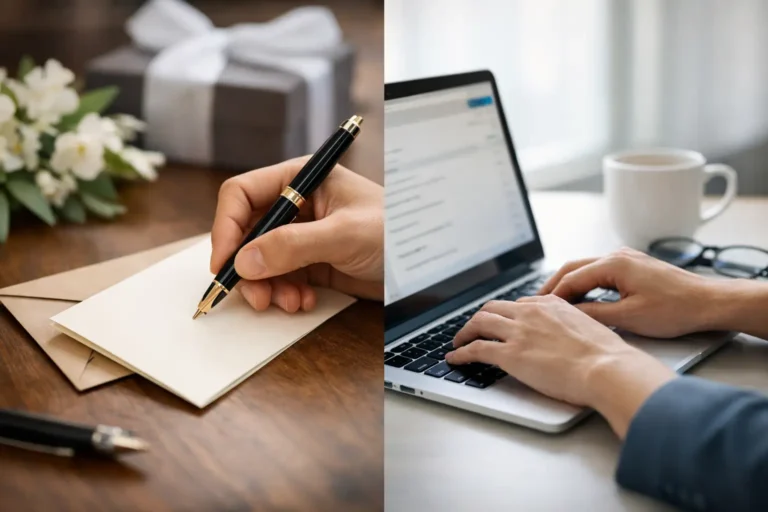
A quick “thank you” can arrive in an inbox before the coffee gets cold. A handwritten card may take a few extra minutes, a stamp, and a trip to the mailbox – but it can end up on a desk, fridge, or mantel for years. That is the real question behind thank-you notes versus emails: not which option is universally better, but what kind of appreciation the moment deserves.
For everyday kindness, speed can be part of being thoughtful. For a major gift, an interview, a wedding, or support during a difficult time, a paper note often says, “I noticed. I remember. This mattered.” Both can be warm, personal, and genuinely appreciated when you choose them with care.
Thank-You Notes Versus Emails: The Big Difference
An email delivers gratitude efficiently. It is ideal when time matters, when you need to reach someone quickly, or when the relationship is primarily digital. Think of a teacher replying to a parent volunteer, a coworker thanking a teammate after a busy launch, or a friend sending a same-day thank-you after receiving event details.
A handwritten thank-you note creates a small physical experience. Someone holds it, sees the design you picked, recognizes your handwriting, and can keep it. It turns a simple message into a little keepsake. That does not mean every note needs perfect penmanship or a poetic paragraph. A few honest lines in a cheerful card can feel wonderfully personal.
The difference is often less about formality and more about lasting power. Emails are easy to revisit, but they can disappear beneath promotions, reminders, and long reply chains. A card has a way of staying visible. It is a tiny piece of happy mail in a very full day.
When an Email Is the Right Thank-You
Email is not the lesser choice. In plenty of situations, it is the most considerate option because it arrives fast and respects the pace of the relationship.
Send an email when you need to acknowledge something promptly. After a job interview, for example, a thank-you email should go out within 24 hours. The hiring team needs a timely follow-up, and waiting several days for a card to arrive can miss the moment. Make it specific: mention part of the conversation, restate your interest, and keep the tone professional but human.
Email also makes sense for work groups, school communications, and quick favors. If a neighbor shares a document, a colleague covers a meeting, or a friend sends helpful recommendations, a thoughtful email or message is usually exactly right. The key is to avoid the flat, automatic “Thanks!” when a little detail would make it warmer. Try: “Thank you for stepping in for me this afternoon. It gave me breathing room, and I really appreciate it.”
Digital thanks are especially useful when distance is involved. A friend across the country does not need to wait a week to hear that their birthday gift made you smile. Send the email now, then follow up with a card if the gift or occasion calls for something more lasting.
When a Handwritten Thank-You Note Means More
A handwritten note shines when someone gave their time, generosity, effort, or emotional support in a meaningful way. It tells the recipient that you paused long enough to choose a card, write your message, and send it just for them.
Weddings are the classic example. Guests may have traveled, given a gift, helped with planning, or showed up ready to celebrate your new chapter. A handwritten card is the natural fit here. The same is true for baby showers, graduation gifts, housewarming presents, milestone birthdays, and holiday gifts from close family or friends.
Paper notes are also lovely for hosts. If someone opens their home, cooks a meal, organizes a party, or makes a weekend visit feel special, a card offers a more memorable thank-you than a quick text from the car. Mention a detail they will recognize: the lemon cake, the movie marathon, the extra blanket in the guest room, or the way they made everyone feel included.
There is also real power in sending a note after someone offers care rather than a physical gift. A friend who listened, a teacher who encouraged your child, a pet sitter who handled a last-minute change, or a neighbor who brought dinner during a hard week may remember your words long after the moment has passed.
The Best Option Can Be Both
You do not have to choose only one lane. For big occasions, an immediate digital thank-you followed by a handwritten card is often perfect. It handles both needs: the sender knows you received their gift or help, and they later get a keepsake that carries the fuller message.
This works particularly well for weddings and showers, where gifts may arrive before the event and schedules get busy fast. A quick message such as, “Your gift arrived, and we are so excited to use it. Thank you!” is kind and reassuring. Then write the formal note once you have time to make it personal.
It also helps with delayed thank-yous. Maybe life got hectic, the guest list was long, or the perfect words did not come right away. Send the card anyway. A late thank-you is still gratitude, and most people are happy to receive it. You can simply say, “I have been meaning to tell you how much your kindness meant to me.” No dramatic apology required.
How to Make Any Thank-You Feel Personal
The format matters, but the message does the emotional heavy lifting. The best notes and emails are specific enough that the recipient knows they are not reading a copy-and-paste line.
Start by naming what you are thankful for. Then add why it mattered or how you will use it. Finally, close with warmth that fits your relationship. For example: “Thank you for the gorgeous cookbook. I have already picked out a pasta recipe for our next family dinner, and I cannot wait to try it. We are lucky to have you in our corner.”
For a work email, the wording can be simpler: “Thank you for reviewing the presentation before the deadline. Your notes made the final version much clearer, and I appreciate you making time.” The message is short, but it gives credit where it is due.
In a card, let the design support the feeling. A bright floral card can suit a thoughtful host thank-you. A cute dog or playful character design can make a friend smile. A clean, classic card may feel right for a mentor, teacher, or professional contact. Choosing stationery that sounds like you is part of the fun. Gooji Paperie cards make it easy to match the mood, whether your thanks are sweet, funny, polished, or a little bit of all three.
A Few Thank-You Note Questions, Answered
How soon should I send a thank-you note?
For gifts and hosted events, aim for one to two weeks when possible. Wedding thank-yous can take longer because there are many to write, but sooner is always kinder. For interviews and time-sensitive professional moments, send an email within 24 hours.
Is a text message enough?
A text is great for quick appreciation, especially between close friends and family. For a significant gift, event, favor, or professional connection, treat it as an immediate acknowledgment and consider following up with an email or card.
What if I do not know what to say?
Use a simple formula: thank them, name the thing, say why it mattered. “Thank you for helping us move on Saturday. We could not have done it without you, and we are so grateful for your time.” Clear beats complicated every time.
Gratitude does not need fancy wording or perfect timing to land well. Pick the format that fits the occasion, add one true detail, and send it. A warm email can brighten someone’s afternoon, while a handwritten note can become a happy little reminder that their kindness was seen.
