

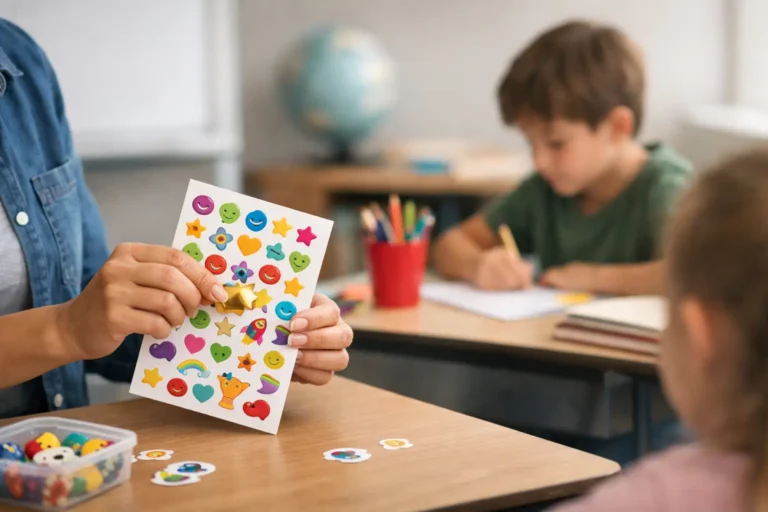
A tiny sticker can turn a wobbly pencil grip, a brave answer, or a neatly packed backpack into a moment a child wants to remember. That is the real secret of how to use classroom stickers: they work best as specific, cheerful recognition, not as a prize handed out on autopilot. Used with care, stickers can help make your classroom feel noticed, creative, and full of small wins.
Start With the Behavior You Want to Notice
The most meaningful sticker is not necessarily the biggest, shiniest, or most popular one. It is the one attached to a clear message. Instead of saying, “Great job!” as you pass out a star, try, “You kept trying even when that math problem felt tricky,” or, “I noticed how kindly you invited someone into your group.”
This approach tells students what they did well and makes the recognition useful beyond that one moment. A child who receives a sticker for careful listening knows what to repeat tomorrow. A student praised for organizing materials learns that classroom responsibility matters just as much as getting an answer right.
Keep a small mix of sticker styles on hand so the moment still feels special. Smiley faces, animals, bright stars, food characters, and encouraging words all give students something to enjoy. For older elementary students, funny designs and cool graphic stickers may land better than traditional reward-chart icons. It depends on the age group, your classroom culture, and what your students genuinely like.
How to Use Classroom Stickers for Daily Routines
Routines are where stickers can quietly do a lot of heavy lifting. The first ten minutes of the school day, transitions between activities, and end-of-day cleanup can all become smoother when students know positive choices will be spotted.
Try choosing one routine to spotlight each week. During arrival, you might recognize students who unpack independently, begin their morning work, or greet classmates kindly. During cleanup, give a sticker to students who return supplies properly or help their table finish without being asked three times.
The key is to avoid creating a race in which only the quickest students get noticed. Spread recognition around the room, and remember that progress counts. One student may earn a sticker for sitting down and opening a notebook right away; another may earn one for making it through a whole transition without a reminder. Fair does not always mean identical.
For younger classes, a sticker can go directly on a hand, shirt, or take-home paper. For an option that lasts longer, give students a personal sticker sheet or small recognition card. They can collect stickers throughout the week and bring their growing collection home on Friday. This feels celebratory without requiring a large prize bin.
Make Learning Visible, Not Just Compliance
Classroom stickers are often used for quiet lines and completed work, but they can do much more. Use them to celebrate learning habits: taking a risk, revising writing, asking a thoughtful question, sharing materials, or explaining an idea to a partner.
During reading time, place a sticker on a bookmark when a student finishes a book, uses a new vocabulary word, or makes a strong prediction. In writing workshops, a “Brave Writer” or colorful character sticker can mark the moment a student added detail, tried a new opening, or edited independently. In math, stickers can recognize perseverance rather than speed.
This matters because students quickly notice what adults reward. If stickers only appear on perfect papers, children may assume school is about getting everything right. When you use them to recognize effort and strategy, you make room for curiosity, mistakes, and growth.
A simple sticker prompt can also add personality to student work. Put a playful sticker at the top of a journal page and ask students to write a story about it. A pizza sticker might inspire a persuasive paragraph about the world’s best topping. A silly animal can become the hero of a comic strip. The sticker is not the assignment – it is the friendly spark that gets ideas moving.
Build a Reward System That Does Not Take Over
Sticker charts can be helpful, especially when you are introducing a new class goal or supporting a student who benefits from visual encouragement. They need a little restraint, though. When every expected action earns a sticker forever, students can start asking, “What do I get?” before they decide to help, try, or participate.
Keep charts focused and temporary. For example, a class might collect 20 stickers for arriving prepared all week, then celebrate with extra read-aloud time, a drawing break, or a chance to choose the classroom music. After the routine feels established, retire the chart and move on to a new goal.
Individual charts work best when they are private or low-key, particularly for students who may feel singled out. A small folder chart, desk card, or personal notebook page can be kinder than a large public display. Public charts can motivate some children, but they can also make others feel behind.
For whole-class systems, vary the outcome. Not every collection needs to lead to candy, toys, or a costly reward. A favorite brain break, lunch with the teacher, a classroom game, or five minutes of creative choice can be just as exciting. The sticker is a visual reminder that the group is working together.
Use Stickers for Connection and Celebration
Some of the sweetest classroom sticker moments have nothing to do with behavior management. A sticker on a birthday card, a note home, or a “welcome back” name tag makes school feel personal. It says someone took an extra second to make the moment brighter.
Create a small celebration station for birthdays, completed units, class jobs, or student milestones. Let students choose one sticker from a thoughtfully curated sheet to add to a card, folder, or memory book. Choice matters. A student who gets to pick between a goofy dog, a flower, a soccer ball, or a sparkly star is more likely to feel that the recognition belongs to them.
Stickers also work beautifully for peer encouragement. Give students a few designated “kindness stickers” to place on a classmate’s compliment card after a group project or buddy reading session. Set clear expectations first: the goal is sincere appreciation, not trading stickers or choosing only close friends.
For families, add a sticker to a positive note home with one sentence about the student’s day. These messages do not need to be long. “Maya showed wonderful patience during our science experiment” paired with a bright sticker can be a fridge-worthy reminder that school is a place where children are growing.
Keep Your Sticker Stash Fresh and Practical
A classroom sticker collection does not need to be enormous, but it should be easy to reach. Store sheets in labeled folders, a small photo box, or clear envelopes sorted by theme: encouragement, seasons, animals, birthdays, and learning. When stickers are visible and organized, you are more likely to use them in the moment instead of saving them for a day that never arrives.
It helps to have both individual stickers and larger sheets. Individual stickers are ideal for quick recognition, while sheets make an easy addition to student folders, party bags, and end-of-year keepsakes. Look for designs with a variety of colors and interests so more students see something that feels like them.
Gooji Paperie’s cheerful, original sticker designs are especially handy when you want everyday encouragement to feel less generic and a little more smile-worthy. A mix of cute, funny, and colorful options lets you match the moment without overthinking it.
Do not worry about making every sticker use perfectly planned. The best ones are often spontaneous: a sticker for the student who tried again, a silly character added to a tough worksheet, or a bright little surprise waiting on a desk after a hard morning. Keep your stash nearby, notice the good stuff, and let those small paper smiles do their job.
