

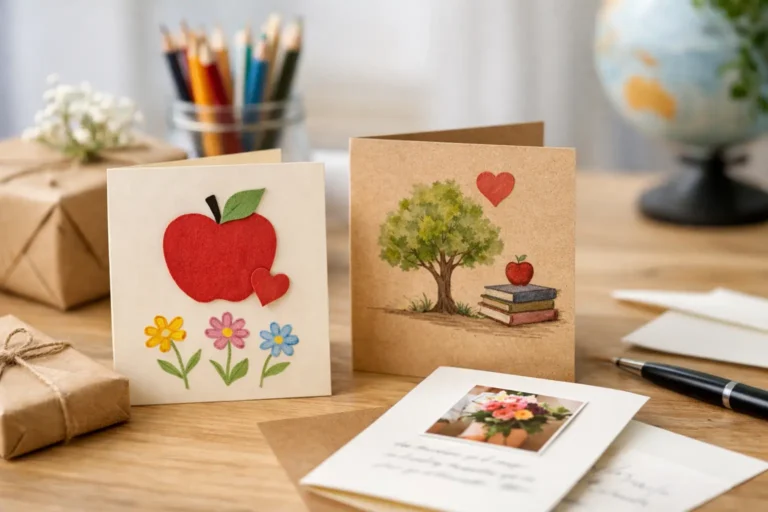
The teacher who remembers your child’s comfort book, stays late to explain a tricky math problem, or turns a rainy recess into a game deserves more than a rushed signature. Teacher appreciation cards create a small, cheerful space to say: I noticed. Thank you. What you do matters.
A great card does not need a perfect speech inside it. It needs to feel chosen with care, written with honesty, and delivered at a moment when a little encouragement can brighten a busy school day. Whether you are shopping for Teacher Appreciation Week, the end of the school year, or a just-because thank-you, the right design and message can turn a simple piece of paper into a keepsake.
Why Teacher Appreciation Cards Still Matter
Teachers receive plenty of practical gifts, and those are always useful. But a card adds the personal part that makes a gift feel complete. It gives a parent, student, or class a chance to name the impact a teacher has had – not in broad, formal language, but in the details that make the relationship real.
A handwritten note can also stand on its own. For families watching their budget, a thoughtfully chosen card is an accessible way to show sincere gratitude. For a child who wants to participate, it is an easy place to draw a picture, add a sticker, or write a few wobbly but meaningful words. Those little marks of personality are often the parts teachers remember.
The occasion matters less than the specificity. Teacher Appreciation Week is a wonderful prompt, but thank-you cards are just as welcome after a successful parent-teacher conference, a classroom milestone, a difficult adjustment, or a kind moment your child talked about all the way home.
Choosing a Card That Fits Their Style
The best teacher appreciation cards do not have to be overly serious. Some teachers will love soft florals, colorful pencils, and classic apples. Others will smile at a playful pun, a bold character illustration, or a design that nods to coffee, books, gaming, or classroom chaos. The goal is not to guess their entire personality from afar. It is simply to choose something that feels warm and intentional.
Think about what you know. Does their classroom feel bright and creative, calm and bookish, or delightfully silly? Have they mentioned a favorite snack, pet, hobby, or subject? Even a small observation can help you move past a generic choice.
If several children or families are contributing, a design with a little extra room inside is especially helpful. A card can become a mini class memory when everyone adds a name, a short message, or a tiny drawing. In that case, a cheerful cover matters, but space and readability matter too.
At Gooji Paperie, original artwork keeps the card-giving moment expressive without making it complicated. A sweet floral style can feel thoughtful and polished, while a funny, modern design can bring a welcome laugh after a long day of answering questions and tying shoelaces.
When classic is the right choice
Classic designs are ideal when you do not know the teacher well, when the note is from a group, or when you are thanking a principal, counselor, coach, or school staff member. A clean thank-you message, colorful school supplies, or a nature-inspired illustration suits almost anyone and leaves the focus on your words.
When humor works best
Humor is perfect when it matches the relationship. A teacher with a lively classroom or a well-known sense of fun may appreciate a card that makes them laugh before they even open it. Keep the joke kind, easy to understand, and centered on appreciation rather than exhaustion. A playful card should still say, clearly, that their hard work is seen.
What to Write Inside a Teacher Thank-You Card
The blank space can feel intimidating, especially when you want your message to sound meaningful. The easiest answer is to skip grand statements and write one true thing. Mention something the teacher did, explain how it helped, and close with a warm thank-you.
For example, a parent might write: “Thank you for helping Maya feel confident enough to raise her hand this year. We have loved seeing how proud she is of herself.” This is short, personal, and far more memorable than a general note about being the best teacher.
A student can keep it even simpler: “Thank you for making science fun. I liked learning about planets, and I will miss your class.” Young writers do not need fancy language. Their own voice is the gift.
If you are signing on behalf of a group, name the shared feeling: “Thank you for bringing patience, energy, and imagination to our classroom every day. Our children have grown because of you.” Then leave room for individual signatures.
Try these approaches when you need a little inspiration:
- Thank them for a specific act of patience, encouragement, or creativity.
- Mention a positive change you noticed in your child.
- Share a favorite classroom memory or funny quote from home.
- Let your child add a drawing, sticker, or handwritten postscript.
There is no need to over-edit. A genuine note with a crossed-out word or uneven handwriting often feels more human than a perfectly polished message.
Pairing Cards With Small, Thoughtful Extras
A card does not need a gift attached, but a small extra can make the moment feel festive. The best choice depends on school policies, your budget, and what you know about the recipient. Some schools limit gift values, and some teachers would rather receive supplies for the classroom than personal items. When in doubt, keep it simple.
A coffee shop gift card, a favorite snack, fresh flowers, or a useful classroom supply can pair nicely with a thank-you card. A collection from the whole class may work better for a larger shared gift, while individual families can contribute notes that make the presentation personal.
Do not overlook practical timing. A card sent home in a backpack can get crumpled, especially near the end-of-year rush. Place it in an envelope, write the teacher’s name clearly, and send it a few days before the last day if possible. If your school has a front office drop-off process, follow it so the card reaches the right person.
Don’t Forget the People Beyond the Classroom
A school day runs on more people than the lead classroom teacher. A thoughtful card for a teaching assistant, special education teacher, librarian, art teacher, music teacher, bus driver, coach, school nurse, counselor, or front-office team member can mean a great deal.
These roles are not always visible in the class photo, but they often make a child feel safe, capable, and welcomed. A short note that says, “Thank you for knowing my child and making school feel friendlier,” carries real weight.
This is also where card packs can be useful. Keeping a few versatile thank-you cards on hand means you are ready when a staff member goes above and beyond. It is an easy habit for families, and it teaches children that appreciation is not reserved only for big occasions.
Make the Moment Feel Like Your Child’s
Parents often take the lead on teacher gifts, but letting children help choose or sign the card makes the thank-you more meaningful. Give them a simple prompt: “What is something your teacher helped you learn?” or “What makes your teacher smile?” Their answer may be sweet, funny, or surprisingly specific.
For younger children, ask them to draw their favorite part of school. For older kids, encourage a sentence in their own handwriting, even if they are tempted to let an adult write every word. A card becomes much more than a transaction when it carries a little of the student’s personality.
Teacher appreciation is not about finding the biggest gift or the cleverest wording. It is about putting a real moment of recognition into someone’s hands. Choose a card that brings a smile, add one honest thought, and let a hardworking educator know that the care they give has traveled far beyond the classroom.
